
Sexually Transmitted Disease (STD) Testing
- Free consultation by Medical Experts:
- Bilingual consultation (Vietnamese & English), with responses in just 2-3 minutes.
- Personalized testing packages, result explanation, and treatment consultation if needed.
- Fast and convenient: Specimen collection is available at our52 Nationwide Lab Centers ➔, at your home, or any private location of your choice.
- 100% Confidential: Your personal data and results are strictly confidential.
1. Testing Panel & Costs
GD Health designs diverse testing packages to suit individual conditions and needs:
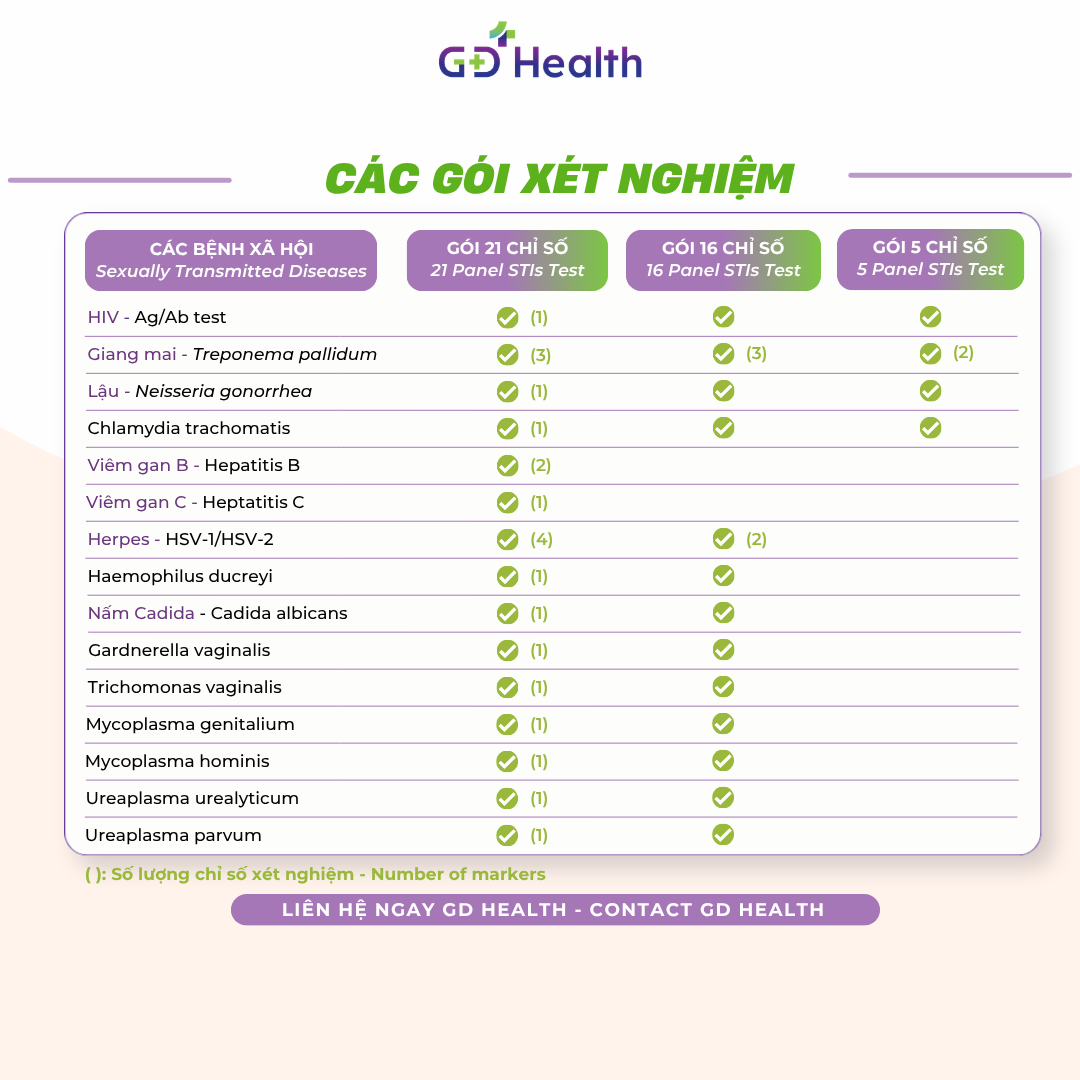
- Comprehensive Panel – 21 Markers
The most comprehensive screening available. Screens for 16 dangerous STIs including HIV, Gonorrhea, Chlamydia, Syphilis, and more (refer to details below). - Advanced Package – 16 Markers
Screens for 14 dangerous STDs (details on the attached image). - Basic Package – 5 Markers
Screens for 4 STDs, including HIV, Gonorrhea, Chlamydia, and Syphilis. - Personalized testing packages
Contact GD Health’s Medical Experts immediately.
Test samples:
- Common test samples: Blood, urine, vaginal fluid, ulcer fluid, and oral cavity fluid (depending on symptoms, symptom locations, and sexual practices…).
- If you are unsure, contact GD Health’s Medical Experts immediately for advice.
Testing costs
- Testing costs range from 200,000 to 2,000,000 VND depending on the testing package, number of samples, testing technology, etc.
- Contact GD Health’s Medical Experts immediately for a consultation and quote.
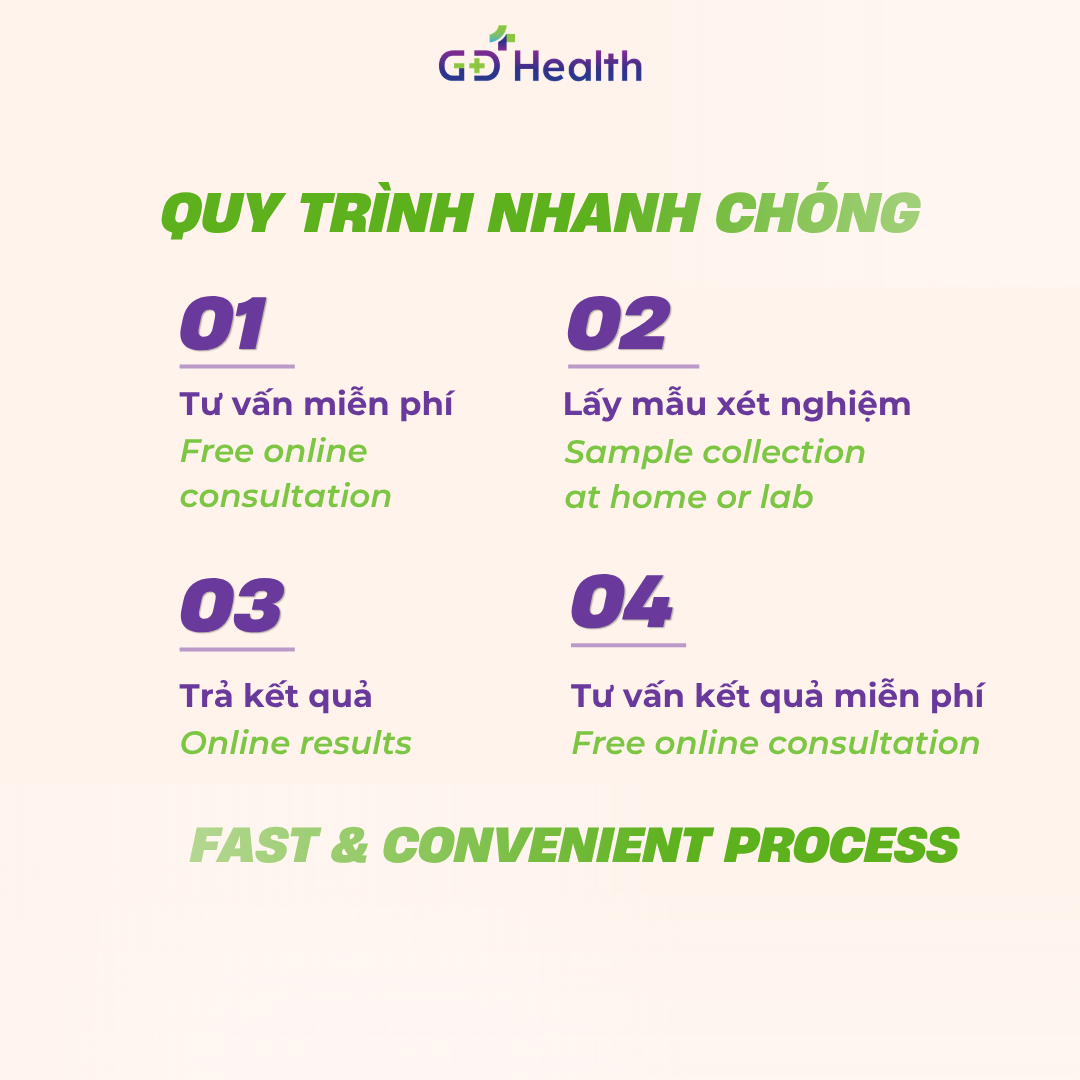
2. Fast process at GD Health
Step 1: Expert consultation
The Medical Expert will assess your condition and infection risk. From there, they will narrow down the potential diseases to suggest the most suitable test for you.
Step 2: Sample collection
- Depending on each case, the Medical Expert will designate the appropriate sampling method (such as blood or urine).
- Samples can be collected at the testing center, at your home, or any convenient and private location for you.
Step 3: Result delivery
- Receive test results: online
- Turnaround time: Depending on the test type, it usually takes 1-2 hours for basic tests, and about 24 hours for PCR tests.
Step 4: Free result consultation with an expert
The Medical Expert will explain the test results and provide treatment advice if necessary
Note: Fasting is not required before the test. If a urine test is performed, you will be asked to provide the first-morning urine sample (first-catch urine).
3. STDs you should screen for:
HIV (1 Markers):
The Combo Ag/Ab test detects both the P24 antigen and antibodies against HIV-1 and HIV-2. Early detection of P24 allows diagnosis during the “window period” before antibodies form, significantly shortening the waiting time.
👉 If exposure occurred less than 72 hours ago, consult immediately: PEP 72h – Emergency HIV prevention solution after unsafe sex.
Syphilis – Treponema pallidum (3 Markers):
Detects the Treponema pallidum spirochete. This disease can cause serious complications to the heart, brain, and other organs if left untreated. Additionally, it can be transmitted from mother to child. Early screening is extremely crucial to prevent long-term damage.
Gonorrhea – Neisseria gonorrhoeae (1 Markers):
Uses PCR to detect Neisseria gonorrhoeae DNA. High sensitivity/specificity ensures accurate diagnosis in genital, throat, and rectal areas, even without symptoms.
👉 See more: Gonorrhea: An overview of what you need to know.
Chlamydia – Chlamydia trachomatis (1 Markers):
Uses PCR to detect Chlamydia trachomatis genetic material. This is one of the most common STIs and a leading cause of cervicitis and pelvic inflammatory disease in women, and urethritis in men, which can lead to infertility if left untreated.
👉 See more: Chlamydia: A comprehensive overview.
Hepatitis B – HBV (2 Markers):
Screens and evaluates Hepatitis B virus (HBV) infection status. The qualitative HBsAg (surface antigen) test indicates whether you are currently infected, while the quantitative Anti-HBs (antibody) test is especially useful to know if the Hepatitis B vaccine is effective or if you have overcome a viral infection and developed immunity.
👉 See more: Hepatitis B
Hepatitis C – HBC (1 Markers):
A test to detect antibodies against the Hepatitis C virus (HCV). The presence of Anti-HCV indicates that the body has been or is currently exposed to the hepatitis C virus. This is a leading cause of cirrhosis and liver cancer.
👉 See more: Hepatitis C
Genital Herpes and Oral Herpes (4 Markers):
Utilizes molecular biology techniques (PCR) to search for the genetic material of the HSV-1 virus (typically causing oral herpes) and HSV-2 virus (typically causing genital herpes) in fluid or first-catch urine. Meanwhile, blood tests for IgG and IgM antibodies help determine the infection status – past infection or acute active infection. The HSV virus remains in the body for life and easily recurs. If untreated, it can cause keratitis (causing blindness) and encephalitis. In particular, newborns infected with HSV have a high risk of mortality.
👉 See more: How does Herpes affect you?
Chancroid – Haemophilus ducreyi (1 Markers):
Detects the Haemophilus ducreyi bacteria causing chancroid. Symptoms usually occur 4-10 days after infection, including easily ulcerated pustules causing pain, fever, chills, painful urination, vaginal discharge, fatigue, pain when urinating…
Candidiasis – Candida albicans (1 Markers):
Detects the overgrowth of Candida albicans yeast. This is the main cause of vaginal yeast infections in women with symptoms such as itching, burning, and clumpy white discharge. In men, yeast can cause balanitis, ulcers at the urethral opening, and a burning sensation along the urethra.
Gardnerella vaginalis (1 Markers):
Identifies the presence of Gardnerella vaginalis bacteria. This is the primary pathogen causing Bacterial vaginosis. This condition occurs when the bacterial balance in the vagina is disrupted, leading to symptoms like abnormal foul/fishy-smelling discharge, burning pain, or itching in the vagina and vulva.
Trichomonas Vaginalis (1 Markers):
Detects the protozoan parasite Trichomonas vaginalis causing Trichomoniasis. This pathogen is sexually transmitted and causes abnormal discharge (frothy, yellow-green, foul-smelling) and genital itching and burning.
👉 See more: Trichomoniasis: Symptoms, Consequences, Complications, and Diagnosis
Mycoplasma genitalium (1 Markers):
This test helps detect the DNA of the Mycoplasma genitalium bacteria. This pathogen is sexually transmitted and can cause persistent urethritis in men and cervicitis and pelvic inflammatory disease in women.
Mycoplasma hominis (1 Markers):
Detects the presence of Mycoplasma hominis bacteria. This pathogen is sexually transmitted, causing vaginitis, pelvic inflammatory disease (PID), and can affect fertility and pregnancy health.
Ureaplasma urealyticum (1 Markers):
Detects the DNA of the Ureaplasma urealyticum bacteria. This pathogen causes urinary tract inflammation in both men and women with manifestations such as stinging pain, a burning sensation during urination, and abnormal discharge. Furthermore, Ureaplasma increases the risk of the following pregnancy issues: Premature rupture of membranes, preterm premature rupture of membranes, preterm birth, chorioamnionitis, amniotic and placental infection, low birth weight in newborns, and postpartum endometritis.
4. Frequently Asked Questions (FAQ)
The “window period” varies depending on the type of pathogen (usually from a few days to a few weeks). To avoid testing too early leading to inaccurate results, please contact GD Health immediately. Experts will evaluate your condition and schedule a sampling appointment for the most accurate results.
The choice of testing package and screening frequency will depend on your age, sexual history, and risk level. Below are general guidelines recommended by the US Centers for Disease Control and Prevention (CDC):
- Sexually active adults: Should proactively undergo periodic screening at least once a year (especially for HIV and Syphilis).
- High-risk groups (men who have sex with men, having multiple partners, not using condoms, sharing needles): Comprehensive testing is recommended repeatedly every 3 – 6 months.
- Women (especially under 25 or with a new partner): Should test for Gonorrhea and Chlamydia regularly once a year to protect reproductive function.
- Pregnant women: Should be tested for HIV, Syphilis, Hepatitis B & C right from the early stages of pregnancy to prevent the risk of mother-to-child transmission.
- People engaging in oral/anal sex: Need to perform specialized fluid sampling tests at the throat or rectum (instead of just urine/genital fluid tests).
Please message GD Health directly so a Medical Expert can accurately assess your risks and recommend the most suitable personalized testing package.
Current STD testing methods are very safe and pose almost no risks.
-
- For blood tests: Very safe. You may feel a slight pinch or notice a small bruise at the injection site, but this is completely normal and will disappear quickly.
- For urine or fluid swab tests (vagina, urethra, ulcers): Completely painless and carry no harmful risks. The technician will perform the procedure extremely gently using specialized instruments.
Using antibiotics before testing can directly affect the diagnostic results of sexually transmitted diseases. Therefore, you need to inform the Medical Expert in detail about the medication you are using so the doctor can review and select the most accurate time for sampling.

– Clinical Pharmacist expert and graduate of Hanoi University of Pharmacy with extensive experience at world-leading pharmaceutical companies such as MSD and Roche — medically reviewed this content
GD Health – Transforming sexual and reproductive healthcare in Vietnam.

LGBTQ+ Test Panel – PRIDE
Designed exclusively for the LGBTQ+ community. Multi-site screening (Oral, Anal, Genital) to match your lifestyle.

Basic Gynecology Panel
Helps identify the cause of gynecological inflammation symptoms such as abnormal discharge, itching, or vaginal pain.

Advanced Gynecology Panel
For women with recurrent gynecological infections. Identifies the pathogen AND determines which medication is effective to treat it completely and avoid drug resistance.

4-panel Self-Test – Best Value
Screen for HIV, Syphilis, Hepatitis B, and Hepatitis C from the comfort of your home

Couples Test Panel – 2Lovers
STI screening for couples helps both partners detect and treat infections timely, preventing cross-infection.

HPV Screening Panel
Detects 24 HPV strains affecting humans, helping to screen early for risks of cervical cancer, anal cancer, and genital warts...

Hepatitis Panel – 3 Markers
Screens for Hepatitis B and C, while assessing viral infection status via HBsAg, Anti-HBs, and Anti-HCV markers.

STIs Routine Screening – Essential
Routine 3 or 6-month screening for common dangerous STIs like HIV, Syphilis, Gonorrhea, and Chlamydia to ensure early detection and treatment.