




Submit your info or message us on Zalo or Messenger
Yeast Infection (Vulvovaginal Candidiasis): Understanding for Proper Intimate Health Care for Women
Health bulletin
14/08/2025
1. Is Vulvovaginal Candidiasis serious?
Vaginal yeast infection is a common condition. It is the leading cause of itching in the intimate area in women. About 75% of women will get the disease at least once in their lives. This condition is not a sexually transmitted disease. However, it can cause significant discomfort and is prone to recurrence if not treated properly. Vaginal yeast infection deeply affects the quality of life. It causes physical and mental discomfort. Symptoms such as itching, burning, and pain can affect work, social, and emotional relationships. About 40-50% of women experience multiple episodes of infection. 6-10% develop recurrent vulvovaginal candidiasis (more than 4 times per year). This requires maintenance antifungal therapy. Understanding the disease helps women proactively protect their health.
2. What is a Vaginal Yeast Infection?
Vaginal yeast infection is an inflammation of the vagina, and if severe, it can spread to the vulva and groin area, which is called vulvovaginal candidiasis. The disease is mainly caused by the fungus Candida albicans. Candida albicans is part of the normal flora in the human body. This fungus usually resides in the vagina without causing symptoms. The disease usually occurs when the bacterial balance in the vagina is disrupted, and the fungus overgrows. This imbalance allows the fungus to proliferate. The fungus then invades the epithelium and causes inflammation. Because the fungus is naturally present in the body, the disease is not necessarily transmitted from others.
3. Signs and Symptoms
Early recognition of signs helps with timely treatment. Typical symptoms of a vaginal yeast infection include:
- Intimate Area Itching: This is the main symptom, often intense and persistent. Itching affects 90% of women with the condition.
- Vaginal Discharge (Leukorrhea): The discharge is thick, white, resembling cottage cheese or fresh cheese. The discharge usually has very little or no odor.
- Burning sensation during urination or after intercourse: A burning sensation may occur. Sexual intercourse can also be painful.
- Redness and swelling of the vulva: The vulva area may be swollen, red, and edematous.
- No foul odor: This is an important differentiating point from bacterial vaginosis (BV).

It is important to note that symptoms can be very mild. Sometimes, the condition causes no symptoms at all. If these symptoms occur, a doctor should be consulted.
4. Causes and Risk Factors
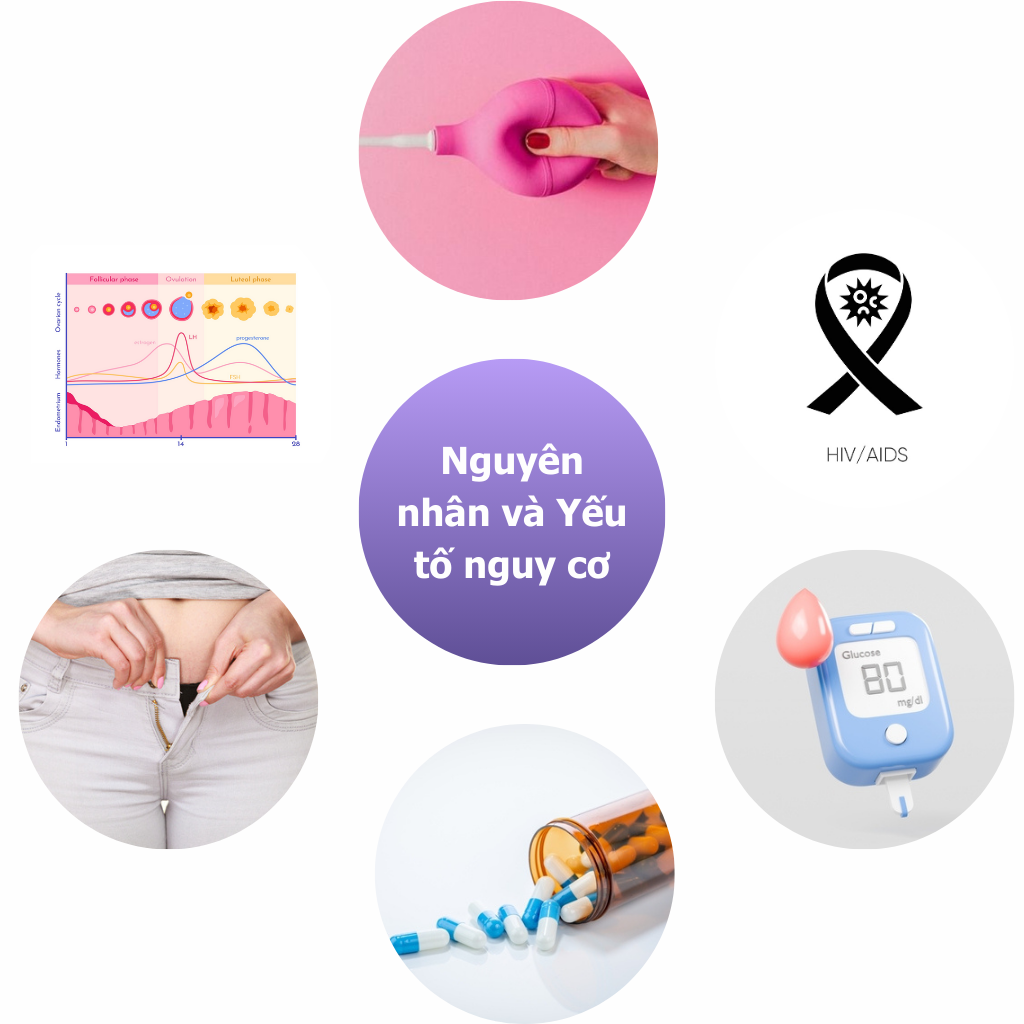
A vaginal yeast infection occurs when there is a microbial imbalance. Many factors can increase the risk of developing the disease:
- Prolonged Antibiotic Use: Antibiotics kill beneficial bacteria in the vagina. This creates conditions for the fungus to overgrow.
- Hormonal Changes: Stages such as pregnancy, menstruation, or the use of oral contraceptives can increase estrogen levels. This increases the risk of fungal infection.
- Wearing tight, moist underwear: Tight clothing, synthetic underwear, or damp clothes create a warm and moist environment. This is favorable for fungal growth.
- Frequent Vaginal Douching: Douching disrupts the natural balance of vaginal bacteria. This removes beneficial bacteria.
- Poorly Controlled Diabetes: People with diabetes have high blood sugar. This increases the risk of fungal infection.
- Immunosuppression or Stress: A weakened immune system (due to corticosteroids, HIV, or other diseases) increases susceptibility to fungal infection. Stress and lack of sleep can also weaken the immune system.
5. When to See a Doctor?
Timely medical examination is necessary. This helps with accurate diagnosis and effective treatment. You should see a doctor when:
- Intimate area itching does not subside after a few days: If symptoms do not improve after self-treatment with over-the-counter medications.
- Thick, white discharge, accompanied by burning during urination: These are typical symptoms. The cause needs to be clearly identified.
- Frequent Recurrence: If you have a vaginal yeast infection 4 or more times in one year.
- Being pregnant and experiencing intimate area itching: Fungal infection during pregnancy is common due to hormonal changes. Safe treatment is required under the guidance of a doctor.
- Uncertainty about the condition: Symptoms of a vaginal yeast infection are similar to other conditions, such as bacterial vaginosis (BV) or sexually transmitted diseases. Accurate diagnosis is very important.
6. Treatment Methods

Treating a vaginal yeast infection is often simple. The main methods include antifungal medications:
- Vaginal Suppositories and Creams:
- Medications such as Clotrimazole, Miconazole, Butoconazole are available as suppositories or creams.
- Creams can also be used for the outer vulvar area.
- Treatment courses can be short (1-3 days) or long (7-14 days), depending on the severity of the disease.
- Oral Medication:
- Fluconazole is a common oral medication. It is usually prescribed as a single 150 mg dose.
- For severe or recurrent cases, more doses of Fluconazole may be needed.
- Oral medication requires a doctor’s prescription.
Important Notes During Treatment:
- Avoid Sexual Intercourse: Abstinence from sex is recommended during treatment. This avoids further irritation and helps reduce the risk of recurrence.
- Do Not Self-Medicate: Do not buy or use medication without a clear diagnosis of the cause. Similar symptoms may be due to other diseases.
- Adhere to the Regimen: Complete the full course of medication, even if symptoms have disappeared.
Treatment for Pregnant Women: Pregnant women can be treated safely with antifungal vaginal creams or suppositories. However, some oral medications like Fluconazole should be avoided during pregnancy, especially in the first trimester.
7. Preventing Recurrence
Preventing recurrence is a key factor. Although the best way to prevent it is not yet known, the following measures can help reduce the risk:
- Keep the Intimate Area Dry and Ventilated: Fungus thrives in moist environments. Keeping the intimate area clean and dry is important.
- Wear Cotton Underwear, Not Too Tight: Breathable cotton helps keep the area dry. Avoid tight clothing and tights.
- Limit Wearing Damp Clothing for Long Periods: Change out of wet clothes (such as swimsuits, workout clothes) immediately after use.
- Do Not Douche: Douching disrupts the natural bacterial balance. This increases the risk of fungal infection.
- Avoid Using Harsh Feminine Washes: Products with strong fragrances or chemicals can cause irritation.
- Control Blood Sugar Well: If you have diabetes, good blood sugar control helps reduce the risk of fungal infection.
- Avoid Antibiotic Misuse: Only use antibiotics when necessary and as prescribed by a doctor.
8. Frequently Asked Questions (FAQs)
| Question | Short Answer |
|---|---|
| Is it sexually transmitted? | It is not a sexually transmitted infection (STI). The fungus is naturally present in the body. However, it is still advisable to clean up after intercourse. |
| Does the partner need to be treated? | Routine treatment is not necessary. Only treat if the partner has symptoms. It is advisable to inform the partner so they can get checked. |
| Can I use vaginal suppositories without seeing a doctor? | You should consult a doctor before using medication. This avoids confusing it with other conditions like BV or trichomoniasis. |
| Is the disease dangerous? | It is not life-threatening unless there is severe immunosuppression. However, the condition causes discomfort and is prone to recurrence if not treated properly. |
| Should sexual intercourse be avoided during treatment? | It should be avoided to prevent further irritation and reduce the risk of recurrence. |
9. Message
A vaginal yeast infection is a very common condition. It is not a bad disease or a sexually transmitted disease. It can be easily treated with antifungal medication. The most important thing is to treat the underlying cause correctly. At the same time, proactive prevention of recurrence is necessary. Scientific intimate area care is the first step. This helps protect oneself against gynecological diseases.
This article is written by Dr Đỗ Hữu Đạt. The doctor has many years of in-depth experience in reproductive and sexual health care.
Reference
[1]. Yeast infection (vaginal) – Symptoms and causes – Mayo Clinic, https://www.mayoclinic.org/diseases-conditions/yeast-infection/symptoms-causes/syc-20378999
- [2]. Overview: Vaginal yeast infection (thrush) – InformedHealth.org – NCBI Bookshelf, https://www.ncbi.nlm.nih.gov/books/NBK543220/
- [3]. www.ijrcog.org, https://www.ijrcog.org/index.php/ijrcog/article/download/2081/1808/7182#:~:text=5%20Approximately%20two%2Dthird%20of,them%20suffer%20from%20multiple%20episodes.
- [4]. Vulvovaginal Candidiasis: A Review of the Evidence for the 2021 Centers for Disease Control and Prevention of Sexually Transmitted Infections Treatment Guidelines – Oxford Academic, https://academic.oup.com/cid/article/74/Supplement_2/S162/6567950
- [5]. Vulvovaginal Candidiasis: A Current Understanding and Burning Questions – PMC, https://pmc.ncbi.nlm.nih.gov/articles/PMC7151053/
- [6]. Pathogenesis of vulvovaginal candidosis. | Download Scientific Diagram – ResearchGate, https://www.researchgate.net/figure/Pathogenesis-of-vulvovaginal-candidosis_fig1_345760612
- [7]. Yeast Infection/Thrush (Candidiasis) | Texas DSHS, https://www.dshs.texas.gov/hivstd/info/thrush
- [8]. What Causes Vaginal Yeast Infections to Develop After Penetrative Sex? – Healthline, https://www.healthline.com/health/healthy-sex/yeast-infection-after-sex
- [9]. Vulvovaginal candidiasis: Epidemiology, microbiology and risk factors, https://repositorium.sdum.uminho.pt/bitstream/1822/42438/1/document_26622_1.pdf
- [10]. What Happens if You Leave a Yeast Infection Untreated? – Verywell Health, https://www.verywellhealth.com/untreated-yeast-infection-risks-5115587
- [11]. What Is a Yeast Infection? Symptoms, Causes, Diagnosis, Treatment, and Prevention, https://www.everydayhealth.com/yeast-infection/guide/
- [12]. Recurrent Yeast Infections – Baylor College of Medicine, https://www.bcm.edu/healthcare/specialties/obstetrics-and-gynecology/ob-gyn-conditions/recurrent-yeast-infections
- [13]. What are the cause, risk factors, preventive measures, signs and symptoms, and treatment of vulvovaginal candidiasis (Vaginal Yeast Infection)? – Dr.Oracle AI, https://www.droracle.ai/articles/11019/vaginal-candidiasis-cause-risk-factors-preventive-measures-signs-and-symptoms-and-treatment
- [14]. Preventing Candidiasis – CDC, https://www.cdc.gov/candidiasis/prevention/index.html
- [15]. Yeast infection during pregnancy: Over-the-counter treatment OK? – Mayo Clinic, https://www.mayoclinic.org/diseases-conditions/vaginitis/expert-answers/yeast-infection-during-pregnancy/faq-20058355
- [16]. Treatment of Candidiasis – CDC, https://www.cdc.gov/candidiasis/treatment/index.html
- [17]. New CDC Vulvovaginal Candidiasis (VVC) Guidelines, https://hcp.monistat.com/sites/monistat_hcp/files/2020-07/New_CDC_VVC_Guidelines_Bachmann.pdf
- [18]. Treatment of vulvovaginal candidiasis: A review of the literature – ResearchGate, https://www.researchgate.net/publication/273522425_Treatment_of_vulvovaginal_candidiasis_A_review_of_the_literature
Related news
Hepatitis C: Do Not Ignore It!
Hepatitis C is a liver inflammation caused by the Hepatitis C virus (HCV). You can contract the virus through contact with infected blood. Most people with HCV have no symptoms. Crucial Fact: There is currently no vaccine for Hepatitis C. The best prevention is avoiding high-risk behaviors. However, testing and treatment can prevent complications and […]
Hepatitis B: A Comprehensive Guide
Hepatitis B is a liver disease caused by the Hepatitis B Virus (HBV). Infection can be short-term (acute) or long-term (chronic). One in two people with Hepatitis B do not know they are infected. HBV is highly contagious and spreads through contact with infected blood and body fluids. Vaccination is the best way to prevent […]
The Invisible Enemy: Chlamydia in Women and the Silent Threat of Infertility
Most of us tend to think that if there are no unusual symptoms, the body is perfectly healthy. However, the truth is that there is an invisible ‘enemy’ silently hiding in your body, capable of causing serious consequences, even infertility. That is Chlamydia, one of the most common sexually transmitted diseases (STDs) in women. Chlamydia […]
Urinary Tract Infection-UTI
Urinary Tract Infection (UTI), also known as urinary tract infection or urinary infection, is one of the most common infections globally, affecting millions each year worldwide, with a significant financial burden on society. The disease occurs when bacteria invade any part of the urinary system, including the kidneys, ureters, bladder, and urethra. Although usually treatable, […]
Syphilis Testing: Current Methods, Pros & Cons, and What You Need to Know
Syphilis is one of the common sexually transmitted infections (STIs) that can progress silently but leave serious consequences if not detected and treated promptly. Regular syphilis testing helps with early diagnosis, protecting your health and that of your partner. This article will help you understand the current syphilis testing methods, the pros and cons of […]

Persistent Sore Throat That Won’t Go Away? Do Not Ignore It – You Might Have Chlamydia!
Have you ever had a sore throat that dragged on for weeks, visiting multiple doctors without finding the cause? Even antibiotics didn’t help? It is very likely that the culprit is not the flu, a virus, or common bacteria – but a sexually transmitted infection called Chlamydia. Chlamydia doesn’t just “hide” in the genital area. […]
Syphilis Overview
Syphilis is one of the most common and serious Sexually Transmitted Infections (STIs), caused by the bacterium Treponema pallidum. If not diagnosed and treated promptly, the disease can progress through multiple stages, causing permanent damage and threatening life. 1. What is Syphilis?? Syphilis is an infection caused by the spirochete bacterium Treponema pallidum. The disease can […]

Chlamydia: A Comprehensive Overview
Chlamydia is one of the most common Sexually Transmitted Infections (STIs) worldwide, caused by the bacterium Chlamydia trachomatis. It is preventable and curable, spreading mainly through unprotected vaginal, oral, and anal sex. 1. What is Chlamydia? Chlamydia is a common sexually transmitted infection (STI) that can occur in both men and women, caused by the […]
Syphilis in the LGBT Community: Are Signs, Symptoms, and Treatment Different?
1. Syphilis and the LGBT Community? Syphilis is a sexually transmitted infection (STI) caused by the bacterium Treponema pallidum. Although it affects all population groups, the rate of syphilis infection is higher in the LGBT community, especially among men who have sex with men (MSM), due to certain sexual behavioral characteristics and barriers to healthcare access. […]
Can Genital Warts Be Treated at Home?
1. What are Genital Warts? Genital warts, also called venereal warts or anogenital warts, are a common sexually transmitted infection (STIs) caused by the Human Papillomavirus (HPV). Although most HPV infections are clinically asymptomatic, HPV types 6 and 11 are responsible for about 90% of visible genital wart cases. It is important to note that other HPV types, […]