




Submit your info or message us on Zalo or Messenger
HERPES: Causes, Symptoms, Diagnosis, and Differentiation
Health bulletin
11/08/2025
Genital Herpes is a common Sexually Transmitted Infection (STI) affecting millions worldwide. While it cannot be completely cured, correct knowledge and effective management allow those living with the virus to maintain a healthy life and minimize transmission risks. This comprehensive paper provides an overview of Genital Herpes, from its definition, symptoms, diagnosis, treatment, to its related impacts and prevention measures, with a special focus on high-risk groups, including sex workers and men who have sex with men (MSM).
1. What is Genital Herpes?
Genital Herpes is a chronic infection caused by the Herpes Simplex Virus (HSV) that persists in the patient’s body for life. This disease is classified as one of the most common sexually transmitted infections.
Definition and Causative Agent
The Herpes Simplex Virus has two main types, HSV-1 and HSV-2, both capable of causing Genital Herpes. Traditionally, HSV-1 is known to cause cold sores on the mouth or face, commonly referred to as “fever blisters.” However, HSV-1 can also spread from the mouth to the genitals through oral sex, leading to cases of Genital Herpes. This indicates that awareness of oral transmission risk is very important, especially for diverse sexual activity groups like MSM, where oral sex may be common. Focusing only on vaginal or anal transmission might overlook a crucial infection route, thus public awareness campaigns need to broaden to include oral sex and emphasize that “fever blisters” can also spread to the genital area. Meanwhile, HSV-2 is the most common cause of recurrent genital herpes cases. This classification is significant in predicting recurrence frequency and counseling patients.
Prevalence and High-Risk Groups
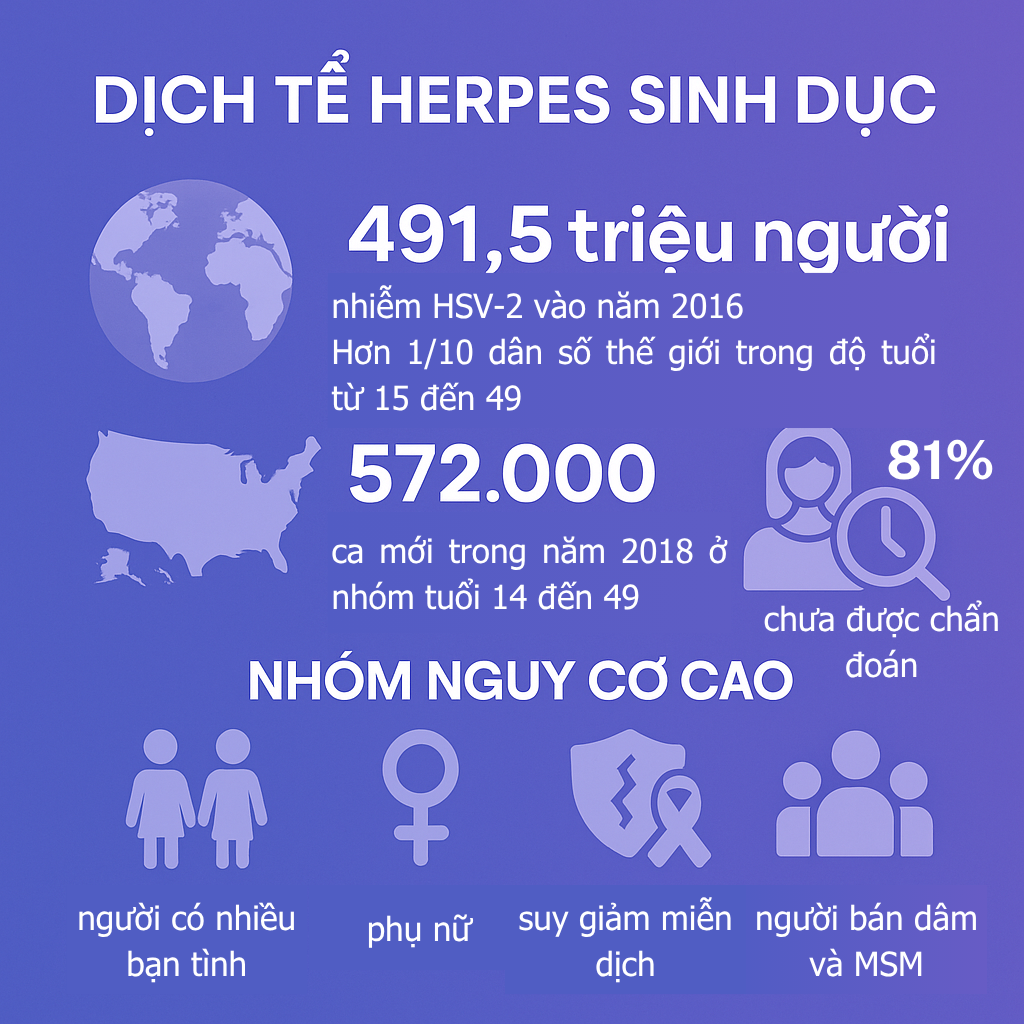
Genital Herpes has significant global prevalence. The World Health Organization (WHO) estimated that approximately 491.5 million people were infected with HSV-2 in 2016, accounting for more than 1/10 of the world’s population aged 15 to 49. In the United States, the Centers for Disease Control and Prevention (CDC) estimated 572,000 new cases of Genital Herpes in 2018 in the 14-49 age group. A notable point is that the majority of people infected with Genital Herpes have no obvious symptoms or only very mild ones, causing them not to recognize their infection status. It is estimated that up to 81% of people with HSV-2 go undiagnosed. The large percentage of infected people who do not know they have the disease is a major challenge in disease control. This implies that prevention strategies cannot rely solely on avoiding sexual activity when symptoms are obvious. It emphasizes the need for regular testing for high-risk groups and counseling on asymptomatic transmission. For high-risk groups such as sex workers and MSM, who may have multiple partners or diverse sexual activities, this risk of asymptomatic transmission becomes even more severe. Therefore, education on the importance of regular testing, especially type-specific serological testing, and counseling on virus transmission even without sores is necessary. High-risk groups for Genital Herpes include:
- People with multiple sexual partners.
- Women who are at higher risk of infection than men.
- People with compromised immune systems, including those with HIV.
- Groups with high-risk sexual activities, such as sex workers and MSM (men who have sex with men).
Transmission Routes
Genital Herpes is primarily transmitted through skin-to-skin contact with an infected person, often through vaginal, anal, or oral sex. The virus can be transmitted through herpes sores, genital secretions, or saliva from the infected person. A particularly important point is that the virus can be transmitted through the skin in the oral or genital area of an infected person even when no visible sores are present. This phenomenon is called “asymptomatic viral shedding.” The ability of the virus to be transmitted even without obvious symptoms makes prevention more complicated than with other STIs that only transmit when symptomatic. This highlights the importance of correct and consistent condom use, as well as considering suppressive antiviral therapy for infected people to reduce the risk of transmission. For target groups with high sexual activity frequency, this becomes even more critical, requiring an emphasis on comprehensive counseling about the risk of transmission, including when asymptomatic, and encouraging supplementary prevention measures such as suppressive therapy. HSV cannot live long outside the body, so it is not transmitted through objects like toilet seats, towels, or pool water. However, the disease can be transmitted from mother to child during pregnancy or childbirth, leading to a dangerous condition called neonatal herpes.
2. Symptoms and Warning Signs
Recognizing the symptoms of Genital Herpes is very important for early diagnosis and effective management. Symptoms can vary between the first outbreak and recurrent episodes.
Symptoms of the First Outbreak
The first outbreak of Genital Herpes usually appears about 4 days after infection, although it can range from 2 to 10 days. Symptoms during this episode tend to be more severe and obvious than in later recurrences. Common signs and symptoms include:
- Itching, burning, or tingling sensation: These are uncomfortable sensations that often appear in the infected area before the blisters actually emerge.
- Blisters and sores: One or more small, painful blisters filled with clear fluid usually emerge in clusters. These blisters can appear on or around the genitals, anus, buttocks, thighs, or mouth. The blisters then rupture, leaving painful sores that may ooze or bleed, and eventually crust over and heal within about 2 to 4 weeks.
- Systemic symptoms: Many people also experience flu-like symptoms such as fever, body aches, headache, and swollen lymph nodes, especially in the groin area.
- Fatigue and discomfort: Some people may feel tired or unwell during the acute phase of the disease.
- Painful urination (dysuria) or rectal discomfort: These symptoms may occur depending on the location of the lesions.
Symptoms of Recurrent Episodes
After the initial infection, the HSV is not eliminated from the body but hides in the nerve ganglia and can reactivate, causing recurrent outbreaks. Recurrences are usually milder, less severe, and heal faster (usually within 6 to 12 days) than the first episode. The frequency of recurrence also tends to decrease over time. A key characteristic of recurrent episodes is the appearance of prodromal symptoms, which are pre-warning sensations. These sensations include itching, burning, numbness, or pain at the site where the outbreak is about to occur, appearing a few hours to a few days before the blisters actually emerge. Recognizing prodromal symptoms is very important for patients because this is an opportunity for them to start early antiviral treatment (episodic therapy), which helps shorten the duration of the outbreak and reduce the severity of symptoms. For sex workers or MSM, this early recognition can help them make responsible decisions about sexual activity, thereby reducing the risk of transmission to others.
Other Common Signs and Asymptomatic Cases
Herpes sores can appear anywhere there is contact with the infected skin area, not just limited to the genitals. This means lesions can appear on the mouth, lips, face, buttocks, or thighs, depending on the transmission route. A major challenge in controlling Genital Herpes is that many infected people have no symptoms or very mild ones that are easily overlooked or mistaken for other skin conditions like pimples or ingrown hairs. The fact that Genital Herpes is often asymptomatic or easily mistaken for common skin conditions is a primary reason why the disease is widespread. This creates a “hidden risk” in the community, especially for groups with high sexual activity. Even in the absence of clinical symptoms, the virus can still be shed and transmitted to others. This reinforces the argument for the importance of regular testing and counseling on asymptomatic transmission risk, rather than relying solely on clinical symptoms for prevention. Education about “atypical” or “very mild” symptoms is necessary to raise awareness and encourage early testing, especially for high-risk groups, to break the chain of unintentional transmission.
3. Diagnosis of Genital Herpes
Accurate diagnosis of Genital Herpes is the first step for effective management and transmission prevention.
When to Seek Examination and Screening?
Everyone should go to a medical facility if they notice any suspected symptoms of Genital Herpes, such as blisters, sores, itching, or burning in or around the genital area. Examination is also recommended if a partner has an STI or has suspected symptoms such as unusual sores, smelly genital discharge, painful urination, or abnormal bleeding. For high-risk groups, including those seeking STI care, those with a history of multiple sexual partners (e.g., ≥10 lifetime partners), and people with HIV, a thorough assessment of Genital Herpes symptoms history is needed. The recommendation for HIV testing for all people diagnosed with Genital Herpes is an extremely important point. This reflects the strong link between HSV-2 and HIV, where HSV-2 increases the risk of HIV infection by 2-3 times. For high-risk groups such as sex workers and MSM, simultaneous testing is essential for comprehensive health management and to prevent the spread of both diseases.
Clinical Diagnosis Methods
After examination, the doctor may give a preliminary diagnosis of Genital Herpes by directly observing any existing sores. However, clinical diagnosis may not be entirely accurate because symptoms can be atypical or easily confused with other conditions. Therefore, confirmation of the diagnosis with paraclinical tests needs to be performed to ensure accuracy.
Paraclinical Tests
For accurate diagnosis of Genital Herpes, paraclinical testing methods play a crucial role:
- PCR Test (Polymerase Chain Reaction): This is the preferred method to confirm HSV infection in patients with active lesions such as blisters or sores. PCR has very high sensitivity and specificity (over 95%), allowing the detection of the virus even without obvious symptoms (asymptomatic viral shedding). The test sample is usually taken from the fluid of the sore. The evolution of diagnosis from viral culture to PCR allows for more accurate and earlier diagnosis, even in asymptomatic cases. This is important for management and transmission prevention, especially in high-risk groups, where early diagnosis can help minimize the spread.
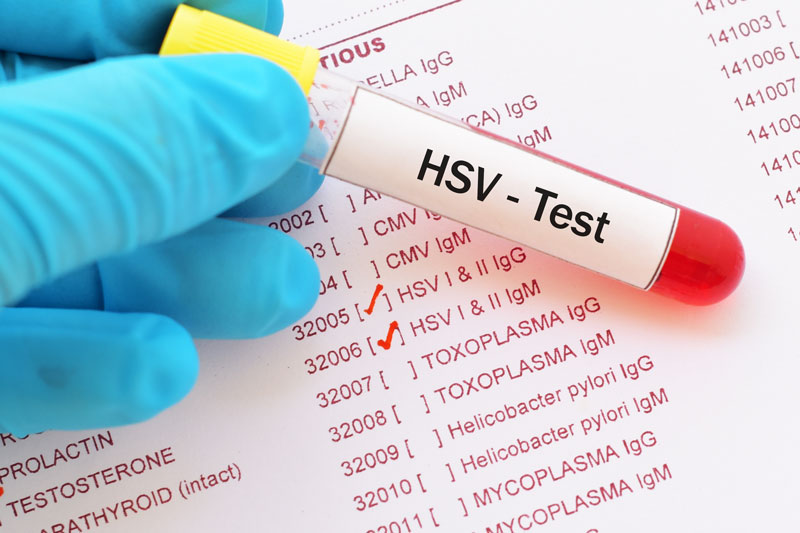
- Type-Specific HSV Serological Tests (IgM and IgG): are two types of serological tests used in the diagnosis of Herpes Simplex Virus (HSV) infection when there are no lesions. IgM usually appears early, helping detect acute or recent HSV reactivation. Meanwhile, IgG appears later and persists long-term, reflecting a previous HSV infection. Identifying IgG helps differentiate between HSV-1 and HSV-2, which is significant for prognosis and counseling. However, IgM can yield false-positive or non-specific results. Therefore, HSV diagnosis needs to combine clinical, PCR, and serological tests to increase accuracy.
- Viral Culture: Viral culture was once considered the traditional gold standard for HSV diagnosis. However, the sensitivity of this method is lower than PCR, especially for recurrent lesions or when lesions have begun to heal.
4. Differentiating Genital Herpes from Other Sexually Transmitted Infections (STIs)
Accurate differentiation of Genital Herpes from other Sexually Transmitted Infections (STIs) is very important. The symptoms of Genital Herpes can be easily confused with other STIs or non-STI dermatological conditions. Accurate differentiation ensures correct diagnosis and timely treatment, avoiding unwanted complications.
Differentiating from STIs with Similar Symptoms
Below is Table 1 to summarize the main differentiating characteristics between Genital Herpes and some STIs with similar symptoms, helping readers easily recognize and seek appropriate medical support. Providing clear differentiating characteristics between Genital Herpes and other STIs is extremely important for non-medical readers. This helps them preliminarily self-assess their symptoms and understand the importance of seeking professional medical diagnosis, rather than self-diagnosing incorrectly.
Table 1: Differentiating Genital Herpes from STIs with Similar Symptoms
| Characteristic | Genital Herpes | Syphilis | Genital Warts | Chancroid | Pearly Penile Papules |
|---|---|---|---|---|---|
| Agent | Herpes Simplex Virus (HSV-1, HSV-2) | Treponema pallidum (Syphilis spirochete) | Human Papilloma Virus (HPV) | Haemophilus ducreyi bacteria | Not precisely determined (excessive growth of papillary cells) |
| Lesion Features | Clusters of vesicles, rupturing into shallow, soft ulcers, possibly with pus, often recurrent | Chancre: solitary, painless, firm, clean-based ulcer, size 0.5-3cm | Soft, friable warts, cauliflower-shaped, may bleed when touched | Deep, pus-filled ulcer, often accompanied by inflamed inguinal lymph nodes | Small red/pink nodules, scattered, thread-like or rough surface |
| Pain/Itching | Usually itchy, burning, painful | Painless/Not itchy | Causes itching, discomfort | Painful | Painless/Not itchy |
| Incubation Period | 2–10 days (usually 4 days) | 3–4 weeks | 3 weeks – 8 months | (Not specified in reference) | (Not specified in reference) |
| Nature | Sexually transmitted disease, chronic | Sexually transmitted disease, curable | Sexually transmitted disease, may recur | Sexually transmitted disease, curable | Not a sexually transmitted disease |
5. STIs Often Co-Occurring with Genital Herpes
Infection with Genital Herpes is often a sign that a person is at high risk for other sexually transmitted diseases. This emphasizes the importance of a comprehensive STI workup when a person is diagnosed with Herpes.
Special Link with HIV
There is a special and concerning link between HSV-2 infection (the main causative agent of Genital Herpes) and the Human Immunodeficiency Virus (HIV). HSV-2 infection increases the risk of HIV transmission by two to three times. Sores or lesions on the skin and mucous membranes caused by Herpes create “entry points” for the HIV virus to invade the body. Furthermore, even without visible sores, Herpes increases the number of immune cells (the target cells of HIV) in the genital mucosa, facilitating HIV entry and replication. In individuals co-infected with HIV and HSV-2 who are not taking effective Antiretroviral Therapy (ART), HSV-2 reactivation is associated with an increase in HIV RNA levels in plasma and genital secretions. The synergistic link between HSV-2 and HIV is an extremely important point that needs to be clearly communicated to the target audience. This is not just an epidemiological link but also a biological mechanism: Herpes creates an “entry point” for HIV and increases the number of target cells. Therefore, HIV testing is very important for everyone diagnosed with Herpes, and integrated management of both diseases is necessary to optimize individual health and prevent community transmission. For high-risk groups such as sex workers and MSM, who may have higher co-infection rates, this is essential to ensure early diagnosis and integrated management for both conditions.
Other Commonly Co-Occurring STIs
When a person is diagnosed with Genital Herpes, doctors will often consider screening for other STIs. This is because common risk factors (e.g., unsafe sexual intercourse) can lead to co-infection with multiple STIs. STIs commonly screened for include:
- Chlamydia
- Gonorrhea
- Syphilis
- Trichomonas vaginalis infection (Trichomoniasis)
- Genital Warts (caused by HPV)
The fact that Genital Herpes often co-occurs with other STIs indicates the importance of a comprehensive STI workup when a person is diagnosed with Herpes. This is important for public health, especially for high-risk groups, as treating one STI while overlooking others can lead to more severe health complications and continued transmission.
Below is Table 2 to summarize STIs often co-occurring with Genital Herpes.
Table 2: STIs Often Co-Occurring with Genital Herpes
| STI | Agent | Relationship with Genital Herpes and Significance | Advice |
|---|---|---|---|
| HIV | Human Immunodeficiency Virus (HIV) | HSV-2 infection increases the risk of HIV transmission by 2-3 times. Herpes lesions create entry points for HIV and increase the number of immune cells (targets of HIV). Increased HIV viral load with co-infection. | HIV testing is necessary for everyone diagnosed with Genital Herpes. |
| Chlamydia | Chlamydia trachomatis bacteria | A common STI, often without obvious symptoms. | Comprehensive STI screening is necessary. |
| Gonorrhea | Neisseria gonorrhoeae bacteria | Causes symptoms such as painful urination, abnormal discharge. | Comprehensive STI screening is necessary. |
| Syphilis | Treponema pallidum spirochete | Causes painless sores (chancres) in the early stages. | Comprehensive STI screening is necessary. |
| Trichomoniasis | Trichomonas vaginalis parasite | Another common STI, many people are asymptomatic. | Comprehensive STI screening is necessary. |
| Genital Warts | Human Papilloma Virus (HPV) | Causes warts in the genital area. | Comprehensive STI screening is necessary. |
|
Note: Co-infection with other STIs often occurs due to common risk factors. Therefore, full screening is necessary to ensure comprehensive sexual health. |
|||
6. Conclusion
Genital Herpes is a common and chronic viral infection caused by HSV-1 or HSV-2. Although there is currently no cure, existing antiviral therapies have proven highly effective in controlling symptoms, reducing the frequency of recurrence, and significantly limiting the risk of transmission. A large percentage of infected individuals have no symptoms or very mild ones, leading to unintentional spread in the community. This is especially critical for high-risk groups such as sex workers and MSM, who may face more risk factors and social pressures. The strong link between HSV-2 and HIV, where HSV-2 significantly increases the risk of HIV infection, is a point that needs to be emphasized. Therefore, concurrent HIV testing upon diagnosis of Genital Herpes is an important public health recommendation. Furthermore, the fact that Genital Herpes often co-occurs with other STIs also indicates the importance of a comprehensive STI workup.
This article is written by Dr Đỗ Hữu Đạt. The doctor has many years of in-depth experience in reproductive and sexual health care.
Related news
Hepatitis C: Do Not Ignore It!
Hepatitis C is a liver inflammation caused by the Hepatitis C virus (HCV). You can contract the virus through contact with infected blood. Most people with HCV have no symptoms. Crucial Fact: There is currently no vaccine for Hepatitis C. The best prevention is avoiding high-risk behaviors. However, testing and treatment can prevent complications and […]
Hepatitis B: A Comprehensive Guide
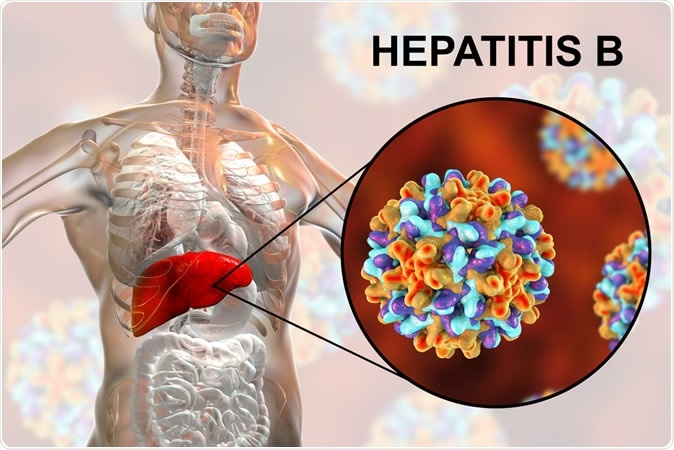
Hepatitis B is a liver disease caused by the Hepatitis B Virus (HBV). Infection can be short-term (acute) or long-term (chronic). One in two people with Hepatitis B do not know they are infected. HBV is highly contagious and spreads through contact with infected blood and body fluids. Vaccination is the best way to prevent […]
The Invisible Enemy: Chlamydia in Women and the Silent Threat of Infertility
Most of us tend to think that if there are no unusual symptoms, the body is perfectly healthy. However, the truth is that there is an invisible ‘enemy’ silently hiding in your body, capable of causing serious consequences, even infertility. That is Chlamydia, one of the most common sexually transmitted diseases (STDs) in women. Chlamydia […]
Urinary Tract Infection-UTI
Urinary Tract Infection (UTI), also known as urinary tract infection or urinary infection, is one of the most common infections globally, affecting millions each year worldwide, with a significant financial burden on society. The disease occurs when bacteria invade any part of the urinary system, including the kidneys, ureters, bladder, and urethra. Although usually treatable, […]
Syphilis Testing: Current Methods, Pros & Cons, and What You Need to Know
Syphilis is one of the common sexually transmitted infections (STIs) that can progress silently but leave serious consequences if not detected and treated promptly. Regular syphilis testing helps with early diagnosis, protecting your health and that of your partner. This article will help you understand the current syphilis testing methods, the pros and cons of […]

Persistent Sore Throat That Won’t Go Away? Do Not Ignore It – You Might Have Chlamydia!
Have you ever had a sore throat that dragged on for weeks, visiting multiple doctors without finding the cause? Even antibiotics didn’t help? It is very likely that the culprit is not the flu, a virus, or common bacteria – but a sexually transmitted infection called Chlamydia. Chlamydia doesn’t just “hide” in the genital area. […]
Syphilis Overview
Syphilis is one of the most common and serious Sexually Transmitted Infections (STIs), caused by the bacterium Treponema pallidum. If not diagnosed and treated promptly, the disease can progress through multiple stages, causing permanent damage and threatening life. 1. What is Syphilis?? Syphilis is an infection caused by the spirochete bacterium Treponema pallidum. The disease can […]
Chlamydia: A Comprehensive Overview
Chlamydia is one of the most common Sexually Transmitted Infections (STIs) worldwide, caused by the bacterium Chlamydia trachomatis. It is preventable and curable, spreading mainly through unprotected vaginal, oral, and anal sex. 1. What is Chlamydia? Chlamydia is a common sexually transmitted infection (STI) that can occur in both men and women, caused by the […]
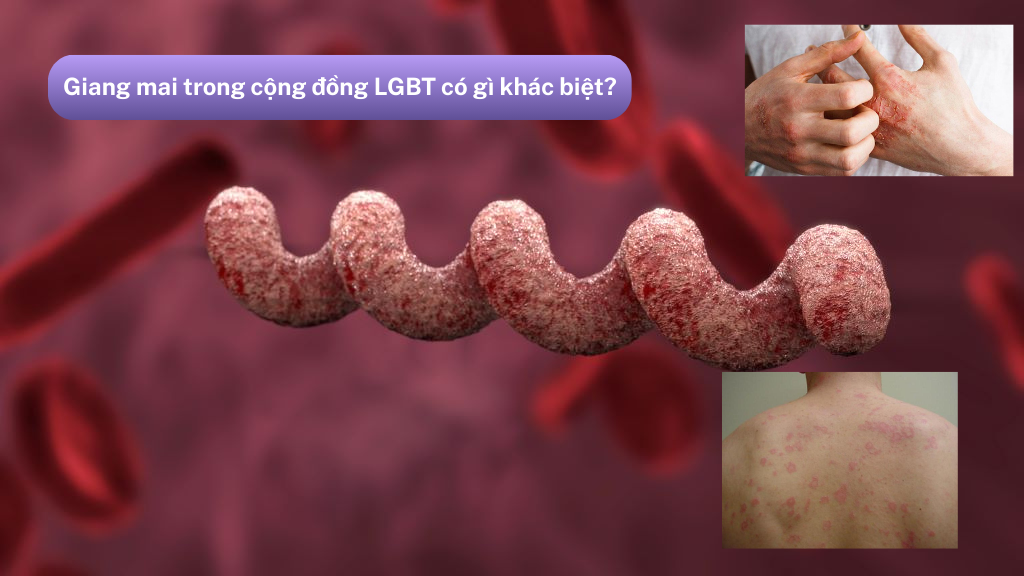
Syphilis in the LGBT Community: Are Signs, Symptoms, and Treatment Different?
1. Syphilis and the LGBT Community? Syphilis is a sexually transmitted infection (STI) caused by the bacterium Treponema pallidum. Although it affects all population groups, the rate of syphilis infection is higher in the LGBT community, especially among men who have sex with men (MSM), due to certain sexual behavioral characteristics and barriers to healthcare access. […]
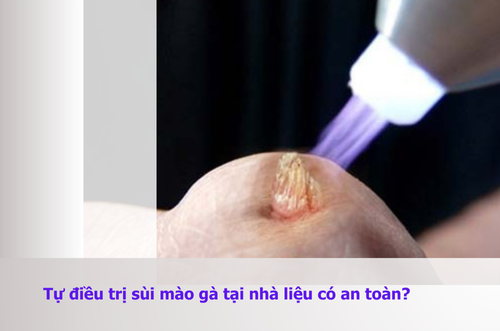
Can Genital Warts Be Treated at Home?
1. What are Genital Warts? Genital warts, also called venereal warts or anogenital warts, are a common sexually transmitted infection (STIs) caused by the Human Papillomavirus (HPV). Although most HPV infections are clinically asymptomatic, HPV types 6 and 11 are responsible for about 90% of visible genital wart cases. It is important to note that other HPV types, […]