




Submit your info or message us on Zalo or Messenger
At-Home HIV Testing Before PEP: Should You Do It?
Health bulletin
04/08/2025
Many people hesitate to visit a medical facility immediately after an HIV exposure risk – due to psychological barriers, fear of stigma, or distance from a health center. In such situations, at-home HIV self-testing (HIV self-test) is an incredibly useful solution. The WHO 2024 explicitly recommends that: HIV self-testing can be used to decide on PEP initiation – if the result is negative, the exposed individual can start taking the medication immediately [1]. Self-testing is particularly suitable in the following situations:
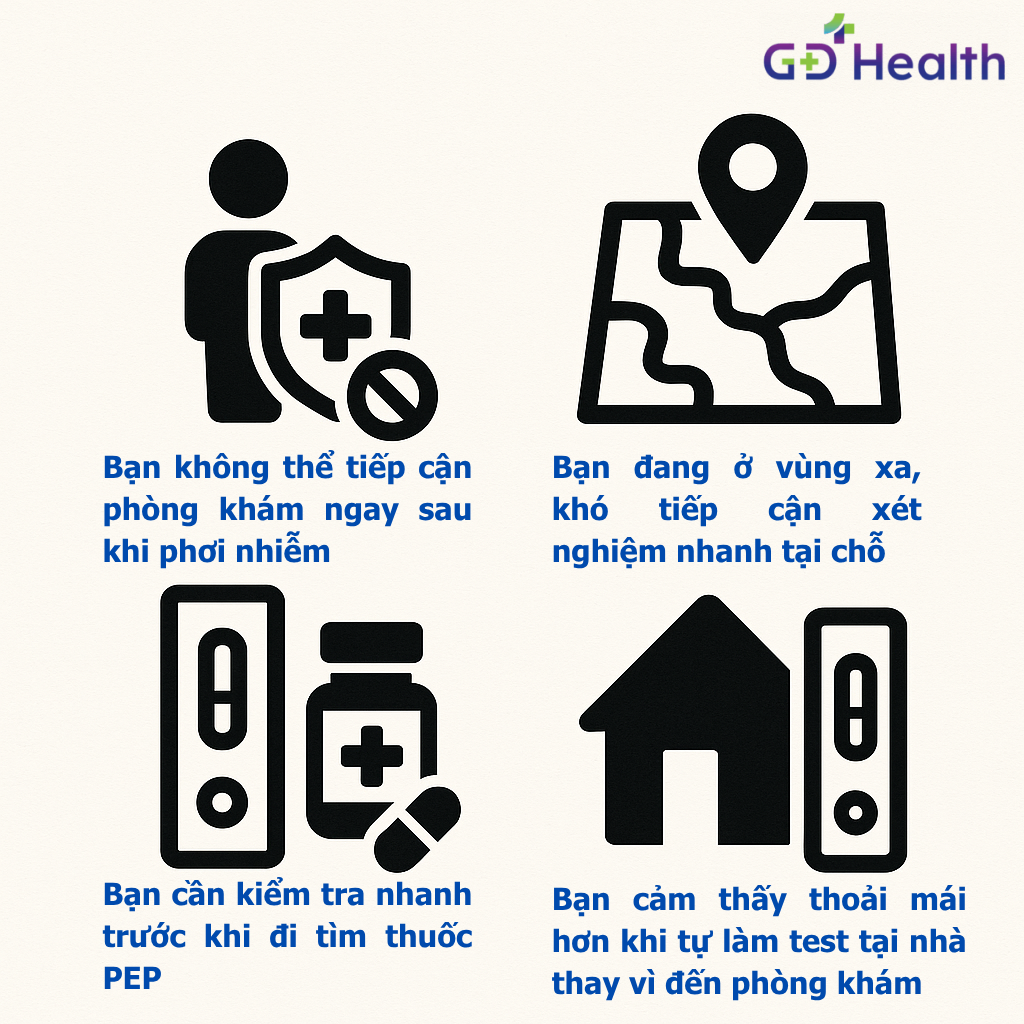
- You cannot reach a clinic immediately after exposure;
- You are in a remote area, with limited access to on-site rapid testing;
- You need a quick check before seeking PEP medication;
- You feel more comfortable testing privately at home rather than going to a clinic.
How to use an HIV self-test before starting PEP:
- Prepare a quality test kit: Choose a self-test recommended by the Ministry of Health or WHO (e.g., using an oral fluid swab or a finger-prick blood drop).
- Read the instructions carefully: Each test kit has specific instructions – follow each step correctly to avoid errors.
Perform the test and read the result:
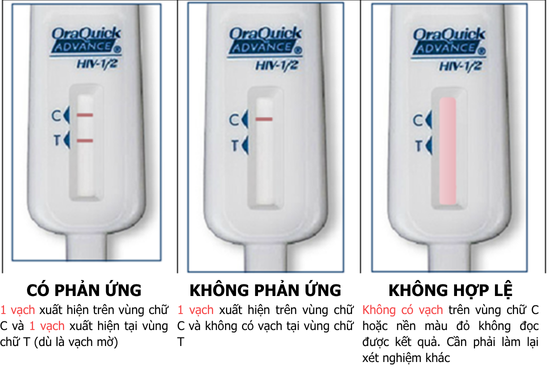
- If the result is negative, you should start PEP immediately if indicated. If the result is positive, you should not take PEP but need to visit a healthcare facility for confirmation with an in-depth test and start ARV treatment if necessary.
- Contact a doctor or the nearest healthcare center: Even when using a self-test at home, you should soon visit for a direct consultation to receive the official PEP regimen and monitoring. Self-testing does not completely replace medical consultation but is a quick enabler to help you act promptly.
Important Note: HIV self-tests have high accuracy but are not absolute. Therefore, if you suspect HIV exposure and are unsure about the self-test result, you should still start PEP early and get retested as soon as possible. WHO emphasizes: “PEP can be started based on a negative HIV self-test result, provided there is no clear contraindication.” HIV self-test is a useful, flexible tool that supports users in accessing PEP more quickly and conveniently. If you have just experienced a situation with HIV risk and are hesitant to visit a clinic, consider using a self-test at home. A negative result allows you to start PEP immediately – don’t miss the golden window. However, remember that self-testing is only the initial step; you still need to see a doctor as soon as possible for comprehensive monitoring and support throughout the medication course [1].
Should the use of PEP be delayed if an HIV screening test is not available or the results are not yet ready?
The initiation of PEP (Post-Exposure Prophylaxis) should not be delayed even if you have not performed an HIV test or the test results are not yet available, including self-tests. According to CDC and WHO guidelines, PEP needs to be started as soon as possible within 72 hours of exposure, ideally within the first 24 hours, to achieve optimal effectiveness in preventing HIV infection. If immediate testing is not possible, you should still start PEP and undergo HIV testing at a healthcare facility as soon as you can. After completing the 28-day course of medication, you need to be retested at time points such as 4–6 weeks and 3 months after exposure to definitively confirm HIV-negative status. Therefore, waiting for test results is not a condition to delay PEP initiation [1].
This article is written by Dr Đỗ Hữu Đạt. The doctor has many years of in-depth experience in reproductive and sexual health care.
Reference
[1]. Guidelines for HIV post-exposure prophylaxis [Internet]. [cited 2025 Jul 17]. Available from: https://www.who.int/publications/i/item/9789240095137.
Related news
Hepatitis C: Do Not Ignore It!
Hepatitis C is a liver inflammation caused by the Hepatitis C virus (HCV). You can contract the virus through contact with infected blood. Most people with HCV have no symptoms. Crucial Fact: There is currently no vaccine for Hepatitis C. The best prevention is avoiding high-risk behaviors. However, testing and treatment can prevent complications and […]
Hepatitis B: A Comprehensive Guide
Hepatitis B is a liver disease caused by the Hepatitis B Virus (HBV). Infection can be short-term (acute) or long-term (chronic). One in two people with Hepatitis B do not know they are infected. HBV is highly contagious and spreads through contact with infected blood and body fluids. Vaccination is the best way to prevent […]
The Invisible Enemy: Chlamydia in Women and the Silent Threat of Infertility
Most of us tend to think that if there are no unusual symptoms, the body is perfectly healthy. However, the truth is that there is an invisible ‘enemy’ silently hiding in your body, capable of causing serious consequences, even infertility. That is Chlamydia, one of the most common sexually transmitted diseases (STDs) in women. Chlamydia […]
Urinary Tract Infection-UTI
Urinary Tract Infection (UTI), also known as urinary tract infection or urinary infection, is one of the most common infections globally, affecting millions each year worldwide, with a significant financial burden on society. The disease occurs when bacteria invade any part of the urinary system, including the kidneys, ureters, bladder, and urethra. Although usually treatable, […]
Syphilis Testing: Current Methods, Pros & Cons, and What You Need to Know
Syphilis is one of the common sexually transmitted infections (STIs) that can progress silently but leave serious consequences if not detected and treated promptly. Regular syphilis testing helps with early diagnosis, protecting your health and that of your partner. This article will help you understand the current syphilis testing methods, the pros and cons of […]

Persistent Sore Throat That Won’t Go Away? Do Not Ignore It – You Might Have Chlamydia!
Have you ever had a sore throat that dragged on for weeks, visiting multiple doctors without finding the cause? Even antibiotics didn’t help? It is very likely that the culprit is not the flu, a virus, or common bacteria – but a sexually transmitted infection called Chlamydia. Chlamydia doesn’t just “hide” in the genital area. […]
Syphilis Overview
Syphilis is one of the most common and serious Sexually Transmitted Infections (STIs), caused by the bacterium Treponema pallidum. If not diagnosed and treated promptly, the disease can progress through multiple stages, causing permanent damage and threatening life. 1. What is Syphilis?? Syphilis is an infection caused by the spirochete bacterium Treponema pallidum. The disease can […]

Chlamydia: A Comprehensive Overview
Chlamydia is one of the most common Sexually Transmitted Infections (STIs) worldwide, caused by the bacterium Chlamydia trachomatis. It is preventable and curable, spreading mainly through unprotected vaginal, oral, and anal sex. 1. What is Chlamydia? Chlamydia is a common sexually transmitted infection (STI) that can occur in both men and women, caused by the […]
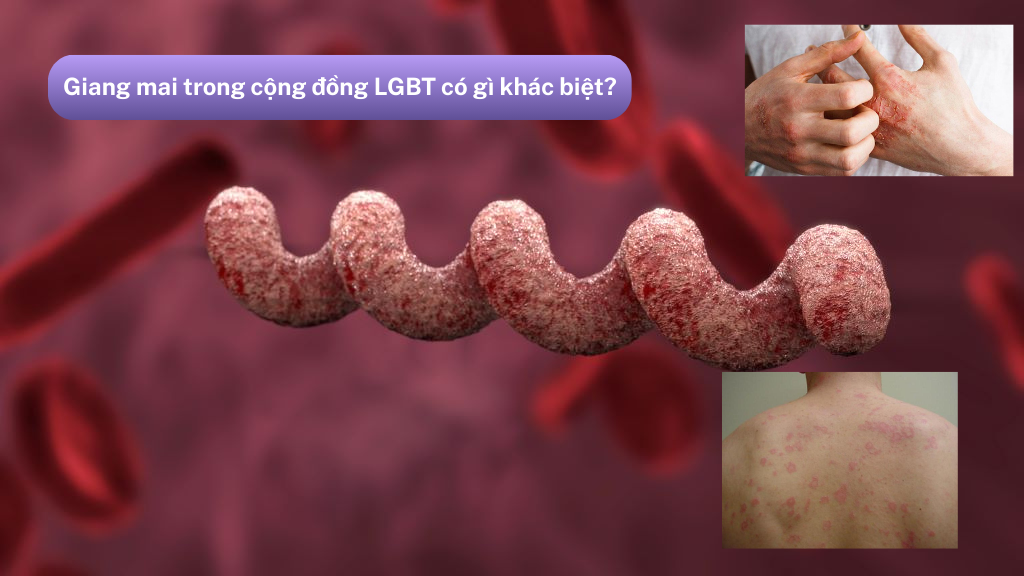
Syphilis in the LGBT Community: Are Signs, Symptoms, and Treatment Different?
1. Syphilis and the LGBT Community? Syphilis is a sexually transmitted infection (STI) caused by the bacterium Treponema pallidum. Although it affects all population groups, the rate of syphilis infection is higher in the LGBT community, especially among men who have sex with men (MSM), due to certain sexual behavioral characteristics and barriers to healthcare access. […]
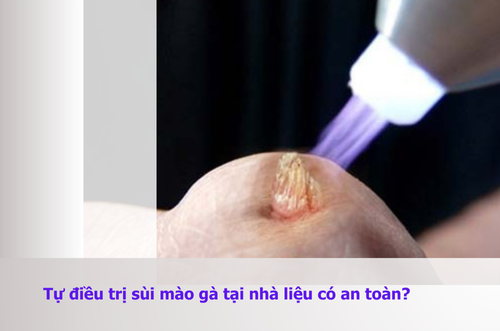
Can Genital Warts Be Treated at Home?
1. What are Genital Warts? Genital warts, also called venereal warts or anogenital warts, are a common sexually transmitted infection (STIs) caused by the Human Papillomavirus (HPV). Although most HPV infections are clinically asymptomatic, HPV types 6 and 11 are responsible for about 90% of visible genital wart cases. It is important to note that other HPV types, […]